Mawlynnong Village Meghalaya – Asia’s Cleanest Village, History, Tourism & Complete Guide
There is a village in the East Khasi Hills of Meghalaya where children begin sweeping the streets at 6:30 every morning before school. Where cone-shaped bamboo baskets called khoh line every lane, so no fallen leaf or wrapper touches the ground for more than minutes. Where plastic bags have been banned entirely and biodegradable waste returns to the soil as compost. This village of approximately 900 people and 95 households has carried the title of Asia’s Cleanest Village since 2003 — awarded by Discover India magazine and reaffirmed continuously, most recently in 2025. Its name is Mawlynnong, and in it, cleanliness is not a government mandate. It is a way of living passed through generations by the Khasi matrilineal community that has called this plateau their home for centuries.
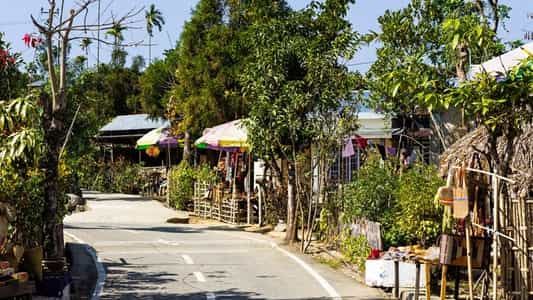
Mawlynnong Village Meghalaya – Quick Overview Table
| Detail | Information |
| Location | East Khasi Hills District, Meghalaya, India |
| Pin Code | 793119 |
| District | East Khasi Hills |
| State | Meghalaya |
| Distance from Shillong | Approximately 80 km; 2.5–3 hour drive |
| Distance from Bangladesh Border | Near Dawki border crossing |
| Population | Approximately 900 people; 95 households |
| Community | Khasi tribe – matrilineal society |
| Administrative Block | Pynursla Community Development Block |
| Vidhan Sabha Constituency | Pynursla |
| Famous For | Asia’s Cleanest Village (2003, reaffirmed 2025); “God’s Own Garden” |
| Key Attractions | Nohwet Living Root Bridge (UNESCO WHC); Sky View Tower (85 ft bamboo); Church of Epiphany (100+ years) |
| Homestays | 34 active homestays |
| Literacy Rate | 100% |
| Best Time to Visit | October–April (post-monsoon to spring) |
| PM Endorsement | Cited by PM Narendra Modi as national model for environmental excellence |
History and the Cleanliness Origin
Mawlynnong’s extraordinary discipline around cleanliness did not emerge from a government scheme or an NGO project. It emerged from survival. Approximately 130 years ago, a devastating cholera outbreak swept through the village. Elders and missionaries together reinforced strict hygiene practices as the community’s primary defence. Families who swept their compounds, disposed of waste in designated baskets, and kept water sources clean survived. The practice embedded itself into the culture, inherited generation to generation, and never relaxed.
By the time Discover India magazine sent its reporters in 2003, they found a village where the streets were genuinely cleaner than most Indian city parks — not for a festival, not for a camera, but as a daily unchanging standard. The award gave the village an international identity it had never sought. BBC, National Geographic, and tourism boards across the world took note. Prime Minister Narendra Modi subsequently cited Mawlynnong as a national model for environmental excellence and community-led hygiene.
The village’s cleanliness system is elegantly simple. Khoh baskets — hand-woven bamboo cones — are positioned at regular intervals along every street to catch falling leaves and any waste before it settles. Each morning, children pick up brooms before school starts. Every household manages its immediate surroundings. Composting handles biodegradable waste. Plastic is banned entirely. The result is a visual standard that is not theatrical; it is structural, daily, and communal.
The Khasi Matrilineal Society
Mawlynnong belongs to the Khasi tribe, one of the few matrilineal communities in India — and one of the most structurally complete. Children inherit surnames from their mother. The youngest daughter of each family inherits the family wealth and is responsible for caring for elderly parents. Women head households and manage businesses including the 34 homestays that now form the backbone of the village’s tourism economy.
This social structure is widely believed to contribute to Mawlynnong’s environmental discipline. Matrilineal inheritance creates stable, long-horizon thinking about land and property — the youngest daughter who inherits the family home has a generational incentive to maintain the environment she will pass on. The community’s management of its shared spaces follows the same logic.
Key Attractions
Nohwet Living Root Bridge (UNESCO World Heritage Site): The most celebrated natural structure in Mawlynnong, the living root bridge is an extraordinary feat of indigenous engineering — created by guiding the aerial roots of Ficus elastica rubber trees across a stream over decades, until the roots grip the opposite bank and form a self-strengthening living bridge. These bridges, unique to the Khasi Hills, become stronger with time rather than weaker. The Nohwet single-decker bridge is the primary example accessible from the village and is included in UNESCO’s recognition of the living root bridges of Meghalaya.
Sky View Tower: An 85-foot-tall observation tower built entirely from bamboo, without a single iron nail. From its top platform, visitors see a panoramic view of the Indo-Bangladesh plains stretching southward — one of the most striking viewpoints in northeast India. On clear days, the flat agricultural landscape of Bangladesh is visible across the border.
Church of Epiphany: A century-old Christian church whose architecture is remarkable not for grandeur but for setting — lush greenery, red and orange flowering plants cascading over the walls, and a stillness that reflects the village’s overall character. The Khasi people converted to Christianity through Welsh missionary activity in the 19th century, and the church remains a living part of the community’s identity.
Tourism and Modern Pressures
In 2025, Mawlynnong receives approximately 250 visitors per day at peak season, serviced by 34 homestays. The tourism economy is genuinely beneficial — it provides income that sustains the community’s commitment to maintaining the village. But the October 2025 review of the village noted significant modern pressures: tourist footfall is straining infrastructure, waste management from visitors challenges the system designed for 900 residents, and the privacy of daily village life has been disrupted by the constant presence of cameras.
The community is actively managing this tension. Early morning arrival or overnight stays are recommended for visitors who want to experience Mawlynnong as it actually is — a living village rather than a performance for day-trippers.
How to Reach Mawlynnong
By Road from Shillong: Approximately 80 km, 2.5–3 hours by car or shared taxi via Pynursla. This is the most common route. The last stretch involves mountain roads.
By Road from Dawki: The Dawki border crossing with Bangladesh is approximately 4 km from Mawlynnong, making it a natural stop on Dawki-Shillong routes.
5 FAQs About Mawlynnong Village Meghalaya
Q1. What is Mawlynnong village Meghalaya famous for?
Asia’s Cleanest Village — a title awarded by Discover India in 2003 and reaffirmed in 2025. Known as “God’s Own Garden,” Mawlynnong has 900 people, 100% literacy, a matrilineal Khasi community, the UNESCO-recognised Nohwet Living Root Bridge, an 85-foot bamboo Sky View Tower, and the century-old Church of Epiphany.
Q2. How far is Mawlynnong from Shillong?
Approximately 80 km, a 2.5–3 hour drive via Pynursla. The nearest border crossing is Dawki (Bangladesh border), approximately 4 km away. Nearest airport is Shillong Airport.
Q3. Why is Mawlynnong so clean?
Cleanliness is a cultural practice rooted in a cholera outbreak 130 years ago, maintained through daily community participation — children sweep streets at 6:30 AM before school, bamboo khoh baskets line every lane, plastic is banned, and composting handles all biodegradable waste. No government programme enforces it; the community does.
Q4. What is the living root bridge in Mawlynnong?
The Nohwet Living Root Bridge — a natural bridge formed by guiding the aerial roots of Ficus elastica rubber trees across a stream over decades. These bridges, unique to the Khasi Hills, grow stronger over time and were collectively inscribed as a UNESCO World Heritage Site. The Mawlynnong bridge is a single-decker example accessible from the village.
Q5. What is the best time to visit Mawlynnong?
October to April — the post-monsoon period through early spring. July-August brings heavy monsoon rainfall that makes paths slippery, though the landscape is at its greenest. Arrive early or stay overnight to experience the village beyond its peak daytime tourist hours.