Mandi Village Muzaffarnagar – Location, History, Connectivity, Harappan Discovery & Complete Guide
Most Indian villages achieve local significance through their crops, their caste composition, their temple, or their proximity to a town. Mandi village in Muzaffarnagar’s Baghara Block achieved something entirely different: in June 2000, three women scraping mud from a mound on the edge of the village uncovered a copper urn containing gold ornaments. By morning, 4,000 villagers had descended on the site. By week’s end, archaeologists from the Archaeological Survey of India had confirmed that the Mandi hoard — approximately 10 kilograms of recovered gold jewellery — was the largest single treasure trove from the Harappan (Indus Valley) Civilisation ever found in India. A village 93 miles east of New Delhi had yielded artefacts comparable to those from Mohenjo-daro and Harappa.
Mandi Village Muzaffarnagar – Quick Overview Table
| Detail | Information |
| Location | Baghara Block, Muzaffarnagar District, Uttar Pradesh |
| Pin Code | 251306 |
| District | Muzaffarnagar |
| State | Uttar Pradesh |
| Division | Saharanpur Division |
| Block | Baghara (C.D. Block code 0020) |
| Assembly Constituency | Charthawal |
| Assembly MLA | Pankaj Kumar Malik |
| Lok Sabha Constituency | Muzaffarnagar |
| Parliament MP | Sanjeev Kumar Balyan |
| Sarpanch | Gram Panchayat – Mandi |
| Post Office | Baghra (Muzaffarnagar) |
| Population (2011 Census) | 6,589 (3,392 male; 3,197 female) |
| Households | 1,064 |
| Total Area | 452.31 hectares |
| Village Code | 111008 |
| Distance from Muzaffarnagar | Approx. 14–16 km (district headquarters) |
| Distance from Delhi | Approx. 200 km (northeast via NH-58/NH-709) |
| Nearest Town | Baghra (~3 km) |
| Historical Significance | Indus Valley Civilisation archaeological site; Mandi Hoard (2000) |
| Primary Language | Hindi |
| Primary Economy | Agriculture (sugarcane, wheat); dairy |
The Mandi Hoard — India’s Largest Harappan Discovery
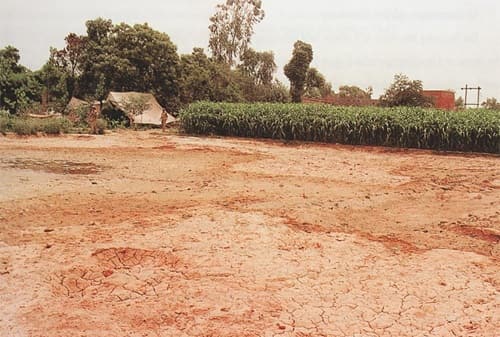
The story begins with a sugarcane farmer. Anil Kumar owned a plot on the edge of the village with a mud mound on it. He told neighbours they could take the mud for their own use. In late May 2000, three women scraping the mound uncovered a copper urn filled with gold ornaments. The discovery triggered chaos: over the next four or five days, 4,000 villagers descended on the site, fighting over finds. A husband-wife pair uncovered a pottery urn containing an estimated 40 kilograms of bracelets and necklaces. Local strongmen with armed retinues arrived to control the excavation.
The Archaeological Survey of India and the Uttar Pradesh Department of Archaeology confirmed subsequently that the jewellery belonged to the Late Harappan period (approximately 2,600–1,900 BCE). The gold ornaments — heart-shaped bangles, connecting screws, conical beads, hollow terminal beads — were comparable to collections from Mohenjo-daro, Quetta, and Allahdino. The ASI recovered approximately 10 kilograms of jewellery. Estimates suggest the total hoard was significantly larger, with much of it melted down by local gold traders before authorities arrived.
The Mandi hoard was declared the first major Harappan find east of the Yamuna River — a discovery that challenged prevailing understanding of the civilisation’s geographic reach. Most known Harappan sites are concentrated in Gujarat, Haryana, Punjab, and Rajasthan. Mandi, in western Uttar Pradesh, indicated the civilisation’s commercial or settlement activity extended further into the Gangetic plains than previously documented. Mandi is now classified alongside Alamgirpur (Meerut) and Hulas (Saharanpur) as one of the easternmost confirmed Harappan archaeological sites.
A portion of the recovered jewellery is displayed at the National Museum of India in New Delhi in the Harappan Civilisation section.
Location and Agriculture
Mandi village sits 14–16 km west of Muzaffarnagar city, approximately 3 km from the block headquarters at Baghra. It is surrounded by Haider Nagar (2 km), Baghra (3 km), Barwala (4 km), and Harsoli (4 km). The village is bounded by Shahpur Block to the south, Muzaffarnagar Block to the east, Charthawal Block to the north, and Budhana Block to the south — a central position within the Muzaffarnagar agricultural belt.
Muzaffarnagar district is one of India’s most important sugarcane and jaggery-producing regions. The Kali River in the district’s west marks the broader agricultural geography. Mandi village’s 452 hectares are primarily agricultural — sugarcane and wheat being the dominant crops — consistent with the broader district pattern where more than 40% of the regional population is engaged in agriculture and where multiple sugar mills operate.
Connectivity
By Road: Muzaffarnagar city (14–16 km) is accessible via district roads from Baghra. NH-709 (the Muzaffarnagar-Shamli highway) and the Delhi-Meerut-Saharanpur corridor provide the wider road connectivity. Delhi is approximately 200 km via the Muzaffarnagar-Meerut-NH 58 route.
By Rail: Muzaffarnagar Railway Station (station code MOZ) on the Delhi-Meerut-Saharanpur line is the nearest major railhead. The line connects to Delhi Sarai Rohilla and onward to New Delhi, Meerut, Saharanpur, and Haridwar.
5 FAQs About Mandi Village Muzaffarnagar
Q1. What is Mandi village Muzaffarnagar famous for?
Mandi is the site of India’s largest Harappan civilisation gold discovery — the Mandi Hoard, discovered in June 2000 when villagers unearthed an estimated 40+ kg of gold jewellery (approximately 10 kg recovered by ASI) belonging to the Late Harappan period (2,600–1,900 BCE). The find is the largest Bronze Age treasure ever discovered in India.
Q2. Where is Mandi village Muzaffarnagar located?
In Baghara Block, Muzaffarnagar district, Uttar Pradesh, approximately 14–16 km west of Muzaffarnagar city and 3 km from Baghra. Pin code 251306. It falls under Charthawal assembly constituency (MLA: Pankaj Kumar Malik) and Muzaffarnagar Lok Sabha constituency.
Q3. What is the significance of the Mandi Hoard in Indian archaeology?
The Mandi Hoard is the largest single Harappan treasure trove ever found in India — comparable to collections from Mohenjo-daro and Quetta. Its location east of the Yamuna River extended the known geographic reach of the Harappan civilisation into the Gangetic plains and challenged previous understanding of the civilisation’s boundaries. ASI classified it as a major Harappan discovery.
Q4. Can tourists visit the Mandi archaeological site?
The village is accessible and residents are familiar with archaeological interest in the area. The original excavation mound has been disturbed. Recovered jewellery from the hoard is displayed at the National Museum of India, New Delhi in the Harappan Civilisation section — a more rewarding visit for those interested in the artefacts themselves.
Q5. What is the primary economy of Mandi village Muzaffarnagar?
Agriculture, primarily sugarcane and wheat cultivation — consistent with Muzaffarnagar district’s designation as one of India’s most significant sugarcane and jaggery-producing regions. Dairy farming is the secondary activity. The village’s 452 hectares are predominantly agricultural.