Malana Village Himachal Pradesh – Location, History, Culture & Complete Travel Guide
There are villages that feel apart from the world. Malana is one of the only ones that actually is. Perched on a narrow plateau in the Malana Nala — a side valley of the Parvati Valley, northeast of the Kullu Valley — at an altitude between 8,700 and 9,938 feet above sea level, Malana was inaccessible to outsiders for centuries by virtue of its geography alone. Three mountain passes, the peaks of Chanderkhani and Deo Tibba, and the wild terrain of the Parvati River gorge formed natural walls. The village built cultural walls too. Visitors were forbidden from touching locals, their homes, or their temples — a rule still in force today. Breaking it requires a fine of ₹1,000 and a ritual cleansing ceremony.
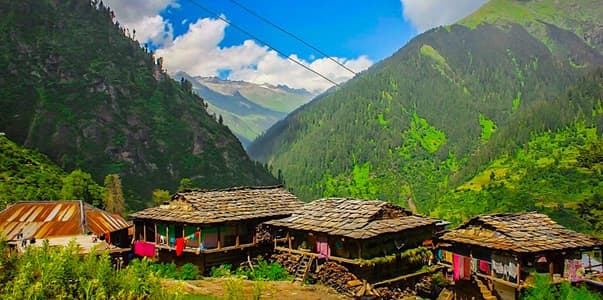
Malana Village Himachal Pradesh – Quick Overview Table
| Detail | Information |
| Location | Malana Nala, Parvati Valley, Kullu District, Himachal Pradesh |
| Altitude | Approximately 8,700–9,938 feet (2,652–3,029 metres) above sea level |
| District | Kullu |
| State | Himachal Pradesh |
| Distance from Kasol | Approximately 21 km (18 km jeep + 3 km trek) |
| Distance from Jari | Approximately 23 km; taxi available to road end; 4–5 hour trek |
| Distance from Kullu | Approximately 50 km by road; 3 km on foot (via passes) |
| Population | Approximately 4,700 (2017 estimate) |
| Languages | Local Malani language (unique, not mutually intelligible with Kullui); Hindi for outside communication |
| Nearest Airport | Bhuntar Airport, Kullu — approximately 20–25 km via Jari |
| Governance | Unique self-governing system with own parliament (Jamlu Devta’s laws) |
| Famous For | Oldest democracy claims; Malana Cream (charas/hashish); taboo culture; ancient temples |
| Notable Trek | Chandrakhani Pass Trek; Deo Tibba Trek; Kheer Ganga Trek |
| Fire Incidents | Major fires in 2008 and 2023 destroyed significant portions of the village |
History and the Oldest Democracy Claim
Malana is widely referred to as one of the world’s oldest democracies — a claim rooted in its entirely self-governing system that predates recorded history. The village operates under laws attributed to Jamlu Devta (Jamadagni Rishi), its presiding deity, whose two-chamber parliament — an upper house of eleven members (the Uppardesh) and a lower house (the Chotadesh) — handles all internal disputes. No Indian court has jurisdiction inside Malana in any practical sense that villagers recognise; disputes are settled by the Jamlu Devta’s oracular judgment.
One of the most persistent historical theories holds that Malana was founded by soldiers from Alexander the Great’s army who became stranded in the Parvati Valley during the Greek conquests of northwestern India in 326 BCE. The Malanese tradition of considering themselves Aryan descendants — and the strict prohibition on physical contact with outsiders — is cited as evidence. Their unique language, the Malani dialect, is not mutually intelligible with any surrounding Himalayan language. Whether the Alexander connection is historically valid or culturally constructed mythology remains debated, but it has become an inseparable part of Malana’s identity.
Malana Cream — The Global Reputation
Malana Cream is the village’s internationally known hashish brand — a hand-rubbed charas of reputedly exceptional quality, twice awarded Best Hashish at High Times Magazine’s Cannabis Cup in 1994 and 1996. The cannabis plants grow wild and cultivated across the surrounding mountains at altitudes between 3,200 and 3,800 metres, where the combination of altitude, soil, and specific microclimate produces the resin potency that has made Malana Cream globally traded. Cannabis cultivation is technically illegal under Indian law, but enforcement in this remote valley has been ineffective for decades. The crop constitutes the primary cash income for most village households.
The police make periodic attempts to destroy the crop, and awareness campaigns have been run. The situation reflects a genuine governance challenge: a constitutionally illegal economic activity sustaining an isolated population that has no alternative agricultural income at this altitude.
How to Reach Malana Village
By Road then Trek: The most common route is Kasol (21 km) or Jari (23 km) to the road end at the Malana hydro project, then a 3–5 hour moderate trek uphill. No public buses reach Malana — visitors must hire a taxi from Kasol or Jari to the road end. Foreign visitors must register at the Jari powerhouse before the trek.
Via Chandrakhani Pass (alternate): From Naggar village in Kullu Valley, the Chandrakhani Pass route is a harder multi-day trek but offers the most spectacular approach, crossing a mountain pass above 3,600 metres.
By Air: Bhuntar Airport in Kullu is the nearest airport, approximately 20–25 km from Jari. Flights connect to Delhi and Chandigarh.
Cultural Rules Every Visitor Must Know
Touching any local resident, their home, temple wall, or belongings is forbidden. Visitors who break this rule are fined ₹1,000 and a purification ceremony is performed. The temple of Jamlu Devta is strictly off-limits to outsiders. Photography requires permission. Hospitality is offered in designated guest areas only.
Key Landmarks and Nearby Places
Chanderkhani Pass — The mountain pass connecting Malana to Naggar, a popular trek offering panoramic Himalayan views.
Deo Tibba Peak — The 6,001-metre snow-covered peak that overhangs the Malana glen, visible from the village plateau.
Malana Hydro Project — A hydroelectric plant built in 2001 that brought road access and electricity to Malana, fundamentally altering the village’s isolation and traditional character.
Waichin Valley (Magic Valley) — A hidden meadow valley beyond Malana, also known as Mini Israel for the Israeli travellers who discovered it on the hippie trail.
5 FAQs About Malana Village Himachal Pradesh
Q1. What is Malana village Himachal Pradesh famous for?
Malana is famous for three intertwined reputations: its claim as one of the world’s oldest democracies with a unique self-governing parliament under Jamlu Devta’s laws; Malana Cream — internationally traded high-potency hashish twice awarded Best Hashish at High Times Cannabis Cup; and its strict taboo culture prohibiting outsiders from touching locals or temple structures.
Q2. How do I reach Malana village?
Hire a taxi from Kasol (21 km) or Jari (23 km) to the road end near the Malana hydro project, then trek 3–5 hours uphill. No public buses go to Malana. Foreign visitors must register at the Jari powerhouse. Nearest airport is Bhuntar, Kullu.
Q3. Is it safe to visit Malana?
Yes, with respect for village rules. The no-touching rule is strictly enforced. Respect for the Jamlu Devta temple is non-negotiable. The village has hosted researchers, trekkers, and tourists for decades. The trek involves moderate physical effort; prior fitness preparation is recommended.
Q4. What language do people in Malana speak?
The Malani dialect — a unique language not mutually intelligible with surrounding Kullui or Hindi. Hindi is used for communication with outsiders. The distinctiveness of the Malani language is one of the pieces of evidence cited for the village’s isolated historical development.
Q5. What is the best time to visit Malana village?
May to June and September to October are the ideal months — before and after the monsoon, with manageable trekking conditions and moderate temperatures. July and August bring heavy rainfall and potentially dangerous trail conditions. Winter (November–March) sees heavy snowfall that can make the trek inaccessible.