Hastsal Village Delhi – Location, History, Connectivity, Nearby Places & Complete Guide
The name is Persian and it is the most interesting thing about the village’s deep history. Hastsal comes from “Hast-Sthal” — the land of elephants — because the area was once a marshy forest where elephants came to bathe. In 1650, Mughal Emperor Shah Jahan built a hunting lodge here, drawn to the same terrain. Centuries later, the elephants are gone, the marsh is gone, and the hunting lodge is gone — but a Mughal-era pillar survives, known locally as the Mini Qutub Minar, standing in the village as a reminder of when this West Delhi ground had a different character entirely.
Today Hastsal is a functional, Blue Line-adjacent urban village between Uttam Nagar and Vikaspuri, its streets active with the rhythms of a working-class West Delhi neighbourhood, and its property market showing the 20% annual appreciation that comes when infrastructure finally connects a long-affordable area to the city’s employment network.
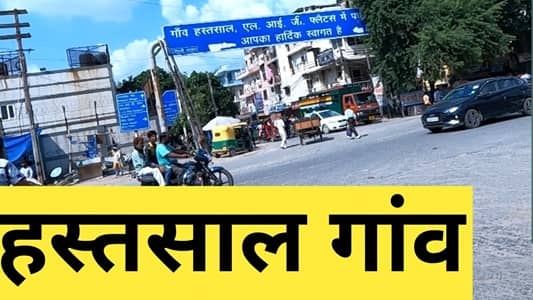
Hastsal Village Delhi – Quick Overview
| Detail | Information |
| Location | West Delhi District, Delhi |
| Pin Code | 110059 |
| Assembly Constituency | Uttam Nagar / Vikaspuri (boundary area) |
| Lok Sabha Constituency | West Delhi |
| Parliament MP | Parvesh Sahib Singh Verma |
| Etymology | Persian “Hast-Sthal” — land of elephants |
| Historical Fact | Shah Jahan built a hunting lodge here in 1650 CE |
| Heritage Feature | Mini Qutub Minar — Mughal-era historic pillar in the village |
| Nearest Metro Station | Uttam Nagar West – Blue Line; Uttam Nagar East – Blue Line |
| Nearest Railway Station | Delhi Cantonment Railway Station; Palam Railway Station |
| Primary Road Access | Najafgarh Road; Hastsal Road; Shivaji Marg; Outer Ring Road |
| Average Property Rate | ₹5,350 per sq ft (apartments) |
| Property Appreciation | 20.2% year-on-year |
| Connectivity Rating | 4.1/5 (residents) |
| Safety Rating | 3.6/5 |
| Key Neighbouring Areas | Uttam Nagar; Vikaspuri; Maharani Enclave; Hastsal Vihar; Vikas Nagar |
History and Etymology
The Persian etymology — Hast-Sthal, land of elephants — places Hastsal within the landscape that the Yamuna’s western plain presented to Mughal-era observers: marshland, shallow lakes, and riverine forest that supported wildlife now vanished from this part of India entirely. Shah Jahan’s 1650 hunting lodge confirms the ecology — the emperor didn’t build hunting lodges in agricultural fields; he built them where game was available.
The Mini Qutub Minar — the Mughal-era pillar that survives in Hastsal village — is the physical remnant of this period. Its informal name reflects its visual kinship with the Qutb Minar in Mehrauli, though it is a different structure type and era. The pillar functions as a heritage marker in a neighbourhood that has otherwise been comprehensively urbanised.
The village’s transition from Mughal hunting ground to dense West Delhi urban settlement spans about 370 years — the hunting lodge period, the agricultural settlement period, the post-Independence urban growth period, and now the metro-connected investment market period.
How to Reach Hastsal Village Delhi
By Metro: Hastsal is served by two Blue Line stations in close proximity. Uttam Nagar West Metro Station opened December 31, 2005 — one of the Blue Line’s original Phase 1 stations — located on Najafgarh Road, Param Puri, Uttam Nagar. Uttam Nagar East Metro Station is also on the Blue Line, approximately 1 km east. The Blue Line runs from Dwarka Sector 21 in the west through Hastsal/Uttam Nagar and continues eastward through central Delhi toward Noida City Centre and Vaishali. Nawada Metro Station (also Blue Line) is another option slightly west.
By Road: Najafgarh Road is the primary arterial running through the Uttam Nagar-Hastsal belt, connecting toward Dwarka and Vikaspuri westward and toward Janakpuri and the Ring Road eastward. Shivaji Marg provides connectivity toward central Delhi via Kirti Nagar.
The Mini Qutub Minar of Hastsal
Hastsal is one of the few West Delhi urban villages with a medieval structure within it. The Mughal-era pillar — the “Mini Qutub Minar” as locals call it — sits within the village as the only surviving physical evidence of Shah Jahan’s 1650 hunting lodge complex. It is not among Delhi’s well-publicised heritage sites and receives far fewer visitors than it deserves for its age and its neighbourhood context. For anyone specifically interested in Delhi’s less-visited Mughal-era structures, the Hastsal pillar is worth the detour.
Key Landmarks and Nearby Places
Uttam Nagar Commercial Zone
The busy commercial strip along Uttam Nagar’s main roads — markets, electronics shops, mobile repair shops, kirana stores, clothing retailers — serves as Hastsal’s primary commercial infrastructure.
Vikaspuri (approx. 2–3 km)
One of West Delhi’s larger planned residential zones, with its own commercial centres, parks, and DDA flats.
Netaji Subhas University of Technology (approx. 5–7 km via Janakpuri)
One of Delhi’s engineering universities, accessible from Hastsal via Blue Line connections.
Deen Dayal Upadhyaya College (nearby)
A Delhi University college within the broader Uttam Nagar-Hastsal belt, contributing to the area’s student housing demand.
Real Estate and Living
At ₹5,350 per sq ft with 20.2% annual appreciation, Hastsal sits at the affordable end of West Delhi’s property market while showing the strong appreciation trajectory typical of Blue Line-proximate localities. The housing stock is predominantly builder floors, DDA flats, and independent houses, with apartments entering the market in recent years. Monthly rents in the Uttam Nagar-Hastsal belt are modest relative to the rest of Delhi, attracting working professionals who commute into central Delhi or the Gurugram corridor via the Blue Line.
Residents rate connectivity at 4.1/5 — strong for a West Delhi urban village — reflecting the two Blue Line stations, the Najafgarh Road bus network, and the Outer Ring Road access. Safety at 3.6/5 reflects the typical urban village profile of this part of Delhi.
5 FAQs About Hastsal Village Delhi
Q1. What is Hastsal village Delhi known for?
Hastsal is a West Delhi urban village in the Uttam Nagar belt, known for three things: its Persian name meaning “land of elephants” (Hast-Sthal), a Mughal-era historic pillar within the village known as the Mini Qutub Minar from Shah Jahan’s 1650 hunting lodge era, and its strong affordability-plus-connectivity profile — ₹5,350/sq ft with 20.2% annual appreciation and two Blue Line metro stations within walking distance.
Q2. Which is the nearest metro station to Hastsal village Delhi?
Uttam Nagar West Metro Station on the Blue Line, opened December 31, 2005, on Najafgarh Road, Uttam Nagar. Uttam Nagar East Metro Station on the same Blue Line is approximately 1 km east. Both connect to Dwarka Sector 21 westward and central Delhi/Noida/Vaishali eastward.
Q3. What is the Mini Qutub Minar in Hastsal village?
The Mini Qutub Minar is a Mughal-era pillar within Hastsal village, a surviving remnant of the hunting lodge complex built by Shah Jahan in 1650 CE. Its informal name reflects its visual similarity to the Qutb Minar in Mehrauli. It is one of West Delhi’s less-known but genuinely old heritage structures.
Q4. What is the etymology of Hastsal?
The name comes from the Persian “Hast-Sthal” — meaning “land of elephants” — reflecting the area’s pre-urban character as marshy forest where elephants bathed. Shah Jahan’s choice to build a hunting lodge here in 1650 confirms the ecological richness of this terrain in the Mughal period.
Q5. Is Hastsal a good place to invest in Delhi real estate?
At ₹5,350/sq ft with 20.2% annual price appreciation, Hastsal offers a value entry into West Delhi’s residential market with strong Blue Line connectivity. It is priced below Uttam Nagar’s more developed commercial zones while sharing the same metro access. The 20% appreciation rate reflects improving infrastructure and growing rental demand from Blue Line commuters.