Basai Village Gurugram: Connectivity, Metro, Nearby Places & Complete Guide
Gurugram doesn’t do things quietly. New sectors announce themselves with hoarding walls and construction cranes. The Dwarka Expressway announced itself for nearly a decade before it fully opened. Even the Cyber City corridor, which reshaped how Delhi’s professionals thought about where to live, arrived with fanfare. Basai village arrived with none of that. It was simply there — a farming settlement on Gurugram’s western edge — absorbing the city’s expansion the way villages on the urban fringe always do.
What makes Basai genuinely different is a 206-hectare wetland on its perimeter that birdwatchers describe as richer in avifauna than Keoladeo National Park. It is a Globally Important Bird Area. It has hosted over 280 bird species including several that are threatened or endangered under IUCN classifications. And it has been fighting for its survival against construction encroachment since at least 2017 — a battle that has involved NGT petitions, government foundation-stone ceremonies, and a conservation community that refuses to let it go quietly. That tension — affordable housing and industrial city on one side, an irreplaceable ecological asset on the other — is exactly what Basai is.
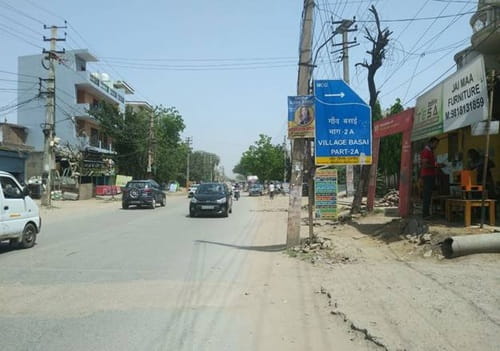
Basai Village Gurugram – Quick Overview
| Detail | Information |
| Location | Western Gurugram, Gurugram District, Haryana |
| Pin Code | 122001 |
| Assembly Constituency | Gurgaon |
| Lok Sabha Constituency | Gurgaon |
| Primary Road Access | Dwarka Expressway (NH-248BB); Basai Road; Khandsa Road; NH-48 accessible |
| Current Nearest Metro | Millennium City Centre (HUDA City Centre) – Yellow Line / Rapid Metro; approx. 5–7 km |
| Upcoming Metro | Basai Village metro station – Gurugram Metro Phase I spur line (1.85 km spur to Dwarka Expressway); under construction, target mid-2027 |
| Nearest Railway Station | Basai Dhankot Railway Station; Gurugram Railway Station |
| Key Ecological Feature | Basai Wetland – Globally Important Bird Area (IBA); 206 hectares; 280+ bird species recorded |
| Average Property Rate | Varies widely; builder floors from approx. ₹25–50 lakh; check current rates with broker |
| Best For | Budget housing near Dwarka Expressway; birdwatching; investors tracking metro corridor |
Where Is Basai Village Gurugram?
Basai sits in the western part of Gurugram, in the belt that links Old Gurgaon to the Dwarka Expressway corridor. It falls under pin code 122001 and is bordered by sectors 9B, 10, 37C, and Pataudi Road on various sides. The Dwarka Expressway (NH-248BB), which fully became operational in August 2025 as a 27.6 km six-lane elevated corridor from Shiv Murti in Delhi to Kherki Daula Toll Plaza in Gurugram, passes through or near the Basai area — placing the village within a fast-growing real estate corridor that runs parallel to NH-48.
Basai Chowk is the primary intersection that most residents and visitors orient themselves around. From here, Basai Road branches toward the village’s internal lanes, while the surrounding area connects to Khandsa Road, Sector 11, Palam Vihar, and the broader New Gurugram sectors.
How to Reach Basai Village Gurugram
By Metro (Current): As of mid-2026, there is no operational metro station in Basai village. The nearest existing metro access is Millennium City Centre (HUDA City Centre) on the Delhi Metro Yellow Line and Rapid Metro Gurugram’s terminus — approximately 5–7 km by road. From HUDA City Centre, the Yellow Line provides direct connectivity northward to central Delhi (Rajiv Chowk, Kashmere Gate, New Delhi station) and southward into Gurugram via Rapid Metro to Cyber City.
By Metro (Upcoming — Under Construction): The Gurugram Metro Phase I project — a 28.5 km corridor with 27 stations running from HUDA City Centre to Cyber City, with a 1.85 km spur from Basai Village to Dwarka Expressway — is currently under construction. Construction commenced in May 2025 at a total estimated cost of approximately ₹6,800 crore. The target completion is mid-2027. A dedicated Basai Village metro station is planned as part of this spur line. When operational, it will transform Basai’s transit profile completely — connecting it directly to Cyber City, Udyog Vihar, Palam Vihar, and HUDA City Centre, with onward Delhi Metro Yellow Line access. This is under construction, not yet operational; treat mid-2027 as an indicative timeline, not a guarantee.
By Road: Dwarka Expressway is the primary artery, linking Basai directly to Delhi’s Dwarka in one direction and Kherki Daula Toll Plaza (NH-48) in the other. Basai Road connects to Khandsa Road, Old Gurgaon sectors, and Pataudi Road. NH-48 is accessible in approximately 10–15 minutes, providing connectivity toward Delhi’s IGI Airport and southward to Manesar and Jaipur. DTC and Haryana Roadways bus services connect Basai to various parts of Gurugram and Delhi. App-based cabs and autos are available throughout.
By Rail: Basai Dhankot Railway Station is the nearest rail point. Gurugram Railway Station, on the Delhi–Rewari suburban railway line, is also within reach and provides connections toward Delhi Cantonment, Hazrat Nizamuddin, and New Delhi.
Basai Wetland – Gurugram’s Most Contested Ecological Asset
This is the detail that separates Basai village from any other affordable housing locality in Gurugram, and it must be written about with the seriousness it deserves.
The Basai Wetland is a 206-hectare natural wetland that has been documented by birdwatchers since at least 2001. The Delhi Bird Club’s field report from that year noted that the wetland is larger than Sultanpur National Park — a protected sanctuary a few kilometres further down the Gurugram–Sultanpur road that has operated as a formal nature reserve since the 1970s. Basai has never received comparable legal protection despite being globally recognised as an Important Bird Area (IBA). Over 280 bird species have been recorded here, including the Black-Necked Stork (near-threatened), Steppe Eagle (endangered), Black-Tailed Godwit (near-threatened), Water Rail, Painted Snipe, and a range of waterbirds that use the wetland as a staging point on the Central Asian Flyway — the migratory route connecting Europe and Central Asia to South Asia.
In 2017, the Municipal Corporation of Gurugram granted permission for a construction and demolition waste treatment plant on a 3.5-acre plot within the wetland. The foundation stone was laid by the Haryana Chief Minister in June 2017. The Delhi Bird Foundation filed a petition at the National Green Tribunal within days. The NGT issued a status quo order, halting construction pending review. That legal battle has continued at various stages since. The fundamental problem is structural: Basai has never been formally notified as a wetland under the Wetland (Conservation and Management) Rules, meaning it lacks the automatic protections that formal designation would provide — even as every ecological measure confirms its importance.
The Gurugram Metro spur line planned to terminate at Basai Village adds another pressure layer. Infrastructure construction near unprotected wetlands carries well-documented ecological risks. As of mid-2026, the wetland’s formal status and the metro project’s construction impact remain active concerns for conservation advocates in the NCR.
For birdwatchers and nature enthusiasts, the wetland remains worth visiting — particularly in winter (October through March) when migratory species are present. There is no formal entry fee or managed visitor infrastructure; it functions as an informal birdwatching site. Early mornings and weekday visits minimise disturbance.
Key Landmarks and Nearby Areas Around Basai Village
Dwarka Expressway Corridor
The fully operational 27.6 km elevated expressway has transformed real estate values across the Basai belt. Sectors 99A, 101, 102, 103, 106, and 109 along the corridor have active residential development from major developers. For Basai village residents, the expressway provides direct, time-predictable access to Delhi’s Dwarka, the airport approach, and central Gurugram.
Palam Vihar (approx. 3–5 km)
One of Gurugram’s established planned residential areas, Palam Vihar borders the Basai belt and is a benchmark for the kind of organised housing that the Gurugram Metro Phase I is designed to better connect. Its markets, schools, and healthcare facilities are within easy reach of Basai residents.
Sector 9B and Sector 10 (adjacent)
The planned sectors immediately adjacent to Basai provide the area’s primary organised commercial and retail infrastructure. The builder floor and independent house stock in these sectors gives potential residents a sense of what slightly more developed versions of Basai’s own housing market look like.
Sultanpur National Park (approx. 8–10 km)
A formally protected bird sanctuary and Ramsar site, Sultanpur is the conservation success story that Basai advocates consistently invoke. It was once equally informal before government protection formalised its status in the 1970s. The park hosts 250+ bird species and is a functional weekend destination for NCR residents. Its proximity to Basai makes the two sites natural companions for birdwatchers organising a day trip from Delhi or Gurugram.
Real Estate in Basai Village Gurugram
Basai’s housing market is structured around affordable builder floors, independent houses, and plotted development — positioned as a lower-cost entry point into the Dwarka Expressway corridor that the organised sector developments on the same road cannot offer. The Gurugram Metro spur line to Basai Village, under construction with a mid-2027 target, is the single most significant medium-term price driver that analysts consistently highlight for this micro-market.
Property values along completed metro corridors in Gurugram have historically appreciated 10–25% in the years surrounding inauguration. Investors who entered Basai village early in the construction cycle are playing exactly that trend. For end-users, the calculus is: affordable housing today, metro connectivity in approximately 18 months, ongoing appreciation thereafter. The risk is construction timeline slippage — Indian metro projects have a documented tendency to run beyond their announced completion dates.
FAQs About Basai Village Gurugram
Q1. What is Basai village Gurugram famous for?
Basai is best known for two things: the Basai Wetland — a 206-hectare Important Bird Area hosting over 280 bird species, larger than Sultanpur National Park and one of the most ecologically significant wetlands in NCR — and its position as an affordable residential village along the Dwarka Expressway corridor. It is also notable for the upcoming Gurugram Metro spur line that includes a dedicated Basai Village station, currently under construction.
Q2. Which is the nearest metro station to Basai village Gurugram?
As of mid-2026, the nearest operational metro is Millennium City Centre (HUDA City Centre) on the Delhi Metro Yellow Line and Rapid Metro Gurugram, approximately 5–7 km away. A dedicated Basai Village metro station is under construction as part of Gurugram Metro Phase I (1.85 km spur from Basai to Dwarka Expressway); the targeted operational date is mid-2027. Verify construction progress before making decisions based on this timeline.
Q3. Is the Basai Wetland worth visiting for birdwatching?
Yes, particularly between October and March when migratory species from Central Asia and Europe are present. Over 280 species have been recorded, including several threatened and near-threatened species. There is no formal visitor infrastructure or entry fee. Early morning visits on weekdays offer the best sightings with least disturbance. The wetland is accessible from Basai village by a short walk or auto ride. Be aware that the site has faced ongoing encroachment pressures and its ecological condition can vary.
Q4. How does the Gurugram Metro Phase I affect Basai village?
The approved Gurugram Metro Phase I includes a 1.85 km spur from the main corridor to Basai Village, connecting it to the Dwarka Expressway. This spur is part of a 28.5 km, 27-station corridor running from HUDA City Centre to Cyber City, under construction from May 2025 with a mid-2027 completion target at an estimated cost of ₹6,800 crore. Once operational, it will connect Basai directly to Cyber City, Udyog Vihar, and HUDA City Centre — transforming the village’s commute profile and almost certainly driving significant property appreciation.
Q5. Is Basai village a good place to live in Gurugram?
For budget-conscious residents who work in Cyber City, Udyog Vihar, or along the Dwarka Expressway corridor, and who are comfortable with a commute to the current metro terminus, Basai offers genuine value — affordable rents and purchase prices, Dwarka Expressway road access, and proximity to Palam Vihar’s social infrastructure. The trade-off currently is the 5–7 km gap to the nearest metro. Once the Gurugram Metro spur becomes operational around mid-2027, this constraint disappears — which is why the micro-market is already attracting investor attention ahead of that inflection point.