Hauz Khas Village Delhi: Where 700 Years of History Meets South Delhi’s Coolest Address
Tucked behind the traffic noise of Aurobindo Marg, Hauz Khas Village doesn’t announce itself. The lanes narrow, the signage gets sparse, and then — suddenly — you’re standing between a 14th-century madrasa and a rooftop bar with fairy lights strung across its railing. That collision of medieval stone and millennial energy is exactly what makes HKV unlike anywhere else in Delhi.
Built around a royal water tank commissioned by Alauddin Khilji in 1300 AD to supply water to Siri Fort, this place has been through more reinventions than most Delhi neighbourhoods manage in ten lifetimes. Today it’s boutiques, galleries, rooftop restaurants, and some of the city’s most photographed sunsets — all sharing a postcode with Feroz Shah Tughlaq’s tomb.
Quick Overview: Hauz Khas Village at a Glance
|
Detail |
Information |
|
Location |
Hauz Khas Village, South Delhi – 110016 |
|
Nearest Metro |
Hauz Khas Metro Station (Yellow & Magenta Lines) |
|
Distance from Metro |
Approx. 1.5–2 km; auto-rickshaw available |
|
Complex Timings |
10:30 AM – 7:00 PM (Closed on Sundays) |
|
Village Entry |
Free |
|
Fort Complex Entry Fee |
Sources conflict between free and ₹20–₹30 for Indians; verify at the gate |
|
Best Season |
October to March |
|
Average Visit Duration |
2–5 hours |
|
Ideal For |
History, art, shopping, dining, photography, nightlife |
The History Behind the Hype
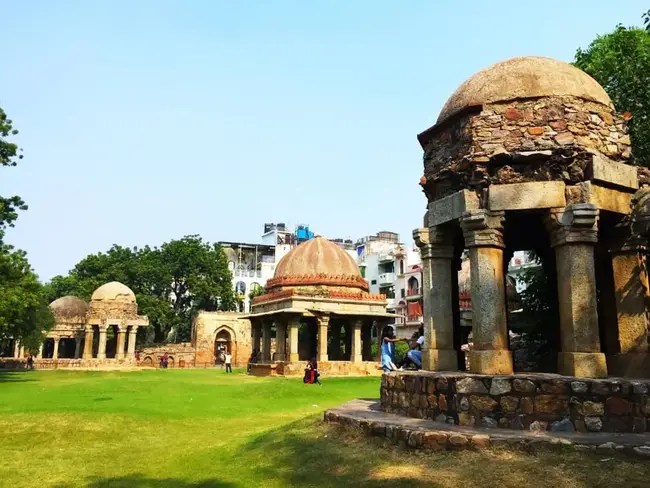
The water tank — Hauz-e-Alai in its original form — was Alauddin Khilji’s infrastructure project, meant to hydrate a growing medieval city. Feroz Shah Tughlaq came along half a century later and turned the site into something grander: a madrasa, a mosque, his own tomb, and a series of stone pavilions, all constructed between 1352 and 1354 AD.
What survives is Tughlaq architecture at its most characteristic — no decorative excess, just assured geometry and solid stone that has aged into genuine beauty. The reservoir still holds water during the cooler months. Parakeets nest in the ruins. Local aunties do their morning walk along the same paths that once led to a functioning Islamic seminary. Few places in Delhi collapse 700 years so casually.
Google Map Location
What to Do at Hauz Khas Village
Walk the Fort Complex
The Hauz Khas Complex is the reason everything else here exists. The ancient madrasa, the lakeside pavilions, the tomb of Feroz Shah Tughlaq — they reward a slow, unhurried walk rather than a quick photograph-and-leave. Early mornings, when light falls across the stone at a low angle and the crowds haven’t arrived, are worth planning your day around.
Explore the Art Galleries
Several contemporary galleries are tucked into converted old homes along the village lanes. The shows rotate regularly and feature both established names and emerging Indian artists working across painting, sculpture, installation, and photography. The architecture of the spaces — old ceilings, uneven floors, odd corners — makes viewing the work feel different here than in a white-cube gallery.
Shop the Boutiques
This is not Sarojini Nagar. The boutiques in HKV are small, independently run, and carry clothing, jewellery, accessories, and home décor that you won’t find replicated across a hundred other stalls. Prices are mostly fixed. The quality and design sensibility vary shop to shop, which is exactly why wandering works better than arriving with a shopping list.
Eat and Drink Well
The food scene spans greasy-great street snacks at the lane entrances all the way to sit-down restaurants with lake-facing terraces and full cocktail menus. The rooftop dining here isn’t a gimmick — you’re genuinely looking at a medieval reservoir with ruins on one side and the Deer Park canopy on the other. That view, at golden hour, with a cold drink, is the specific reason HKV has the reputation it does.
Spend Time in Deer Park
Attached to the complex and consistently overlooked by first-timers rushing toward the cafés, Deer Park is a proper green lung — resident deer, peacocks, old trees, and the kind of quiet that South Delhi rarely offers. Worth at least twenty minutes of any visit.
Best Time to Visit
October through March is when Hauz Khas Village earns every bit of its reputation. The lake fills up, the evenings cool down, and the rooftop culture that defines HKV becomes properly enjoyable. Winter sunset over the ruins — the light turning the stone amber while the city hums below — is one of those Delhi experiences that people describe to you unprompted, whether you asked or not.
Avoid May through September. The summer heat makes the stone complex uncomfortable by mid-morning, and the monsoon, while briefly beautiful, brings waterlogged lanes and unreliable access.
How to Get There
The most practical route in is via metro — Hauz Khas Station sits on both the Yellow and Magenta Lines, making it accessible from most parts of the city. From the station exit, the village is about 1.5 to 2 km; a short auto-rickshaw ride or a walkable distance in winter. Driving and parking inside HKV is a frustrating experience. The lanes are narrow, parking is limited and expensive, and the whole area genuinely rewards arriving without a car.
FAQs About Hauz Khas Village
1. Is there an entry fee to visit Hauz Khas Village?
The village itself is free to enter. The fort complex entry fee is a point of inconsistency across sources — some list it as free, others cite ₹20–₹30 for Indian nationals. Confirm at the gate on the day of your visit.
2. How much time do I need?
Two to three hours covers the fort, a gallery, and a meal. Budget four to five if you plan to shop the boutiques, catch the sunset from the ruins, and stay for an evening drink. The place changes character entirely after dark.
3. Is it family-friendly?
Yes, during the day. The Deer Park works well for kids, the ruins are open and walkable, and daytime cafés are relaxed and all-ages. The nightlife side of HKV picks up after 9 PM, so families typically wrap up by early evening.
4. What’s the difference between Hauz Khas Village and Hauz Khas Market?
Adjacent but distinct. The Market is the older commercial strip — known for bridal lehengas, fabric, and furniture. The Village is the cluster of lanes around the fort complex: galleries, boutiques, restaurants, and bars. Most visitors asking about HKV mean the Village.
5. Is the area easy to navigate on foot?
The village lanes are narrow and pedestrian-friendly, so walking is genuinely the best way to explore. The terrain is uneven in places, and the fort area involves stairs, so it can be tricky for visitors with mobility concerns. Wear comfortable shoes regardless.