Dera Village Delhi: Connectivity, Nearby Places & Complete Guide
South Delhi ends, and then there’s more South Delhi. Beyond Chhatarpur, past the temple road’s traffic and the farmhouse gates, the terrain changes character. The ground rises slightly. The tree cover thickens. The Aravalli hills — ancient, worn down by time to modest ridges — push against Delhi’s southern edge. This is where Dera village sits. Known also as Dera Gaon, and collectively referenced as part of Dera Mandi, it is a Gujjar-dominated village of the Tanwar gotra in the Mehrauli tehsil of South Delhi, bordered by the eco-sensitive zone of the Asola Bhatti Wildlife Sanctuary and one of the capital’s most established farmhouse belts.
It is a village where old Delhi meets wealthy Delhi quietly, without the neon and glass that mark that collision in Gurugram or Aerocity.
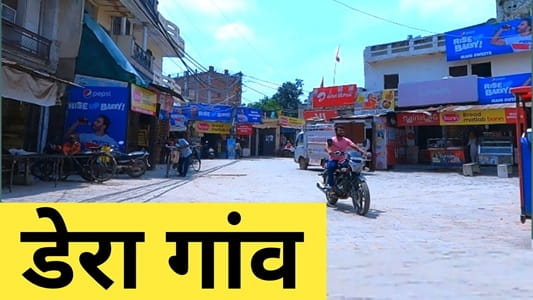
Dera Village Delhi – Quick Overview
| Detail | Information |
| Location | Dera Mandi area, Mehrauli Tehsil, South Delhi District, Delhi |
| Pin Code | 110074 (Dera Mandi); 110047 (parts of surrounding area) |
| Assembly Constituency | Chhatarpur |
| Assembly MLA | Kartar Singh Tanwar |
| Lok Sabha Constituency | South Delhi |
| Dominant Community | Tanwar Gujjar |
| Nearest Metro Station | Chhatarpur Metro Station – Yellow Line (Delhi Metro); approx. 8 km |
| Alternative Metro | Sultanpur Metro Station – Yellow Line; approx. 5–7 km |
| Primary Road Access | Mehrauli-Gurgaon Road; Dera Mandi Road; Faridabad-Gurgaon Road |
| IGI Airport Distance | Approx. 16–19 km |
| DLF Cyber City Distance | Approx. 17 km |
| Key Ecological Feature | Asola Bhatti Wildlife Sanctuary (eco-sensitive zone) |
| Known For | Farmhouse belt; Aravalli foothills; proximity to Chhatarpur Temple; peaceful residential character |
Where Is Dera Village and What Is Dera Mandi?
Dera village sits in the southwestern fringe of Delhi, within the Aravalli hills extension that forms the capital’s southern ridge. The region is collectively referred to as Dera Mandi — a term that groups Dera village with the surrounding Mandi area to distinguish it from other similarly named places. The village spans approximately 16.99 sq km, incorporating hilly terrain, agricultural fields, and built-up areas.
Its immediate neighbours are Chhatarpur, Asola, Fatehpur Beri, and Mandi. The Delhi-Haryana border is close — Gurugram’s northern edge is approximately 13–16 km away. That proximity gives Dera Mandi a border-zone character familiar from other South Delhi villages along this corridor: Gujjar-dominated village core, farmhouses on the outer edges, wildlife sanctuary land pressing in from the south, and the city’s premium residential zones (Vasant Kunj, Saket, Mehrauli) accessible within a 20-minute drive.
The Mehrauli-Gurgaon Road is the primary connectivity artery, linking Dera Mandi directly toward Gurugram to the south and toward Mehrauli, Qutub Minar, and Saket to the north.
History and Community of Dera Village
Dera’s recorded history runs through the Gujjar community’s centuries-long presence in this part of South Delhi. The Tanwar gotra — the same community associated with the founding legend of Delhi through the Tomars — has been the dominant group in Dera village for generations. The village maintains this community identity even as the surrounding farmhouse belt has attracted buyers from across Delhi’s business and tech communities.
The region’s hilly terrain and Aravalli proximity made large-scale agricultural development difficult, which is precisely why it retained green cover and village character long after surrounding areas urbanised. The farmhouse belt that developed from the 1980s and 1990s onward was a direct consequence of that terrain — buyers wanting rural aesthetics within Delhi’s administrative boundaries found Dera Mandi’s land available, relatively affordable compared to Chhatarpur’s immediately adjacent zones, and ecologically rich.
Asola Bhatti Wildlife Sanctuary – The Ecological Context
Dera village’s most significant geographical neighbour is the Asola Bhatti Wildlife Sanctuary, a 32.71 sq km protected area on the Southern Delhi Ridge of the Aravalli hills. Established in 1986, the sanctuary straddles the Delhi-Haryana border and extends into parts of Faridabad and Gurugram districts. It is part of the Northern Aravalli leopard wildlife corridor — the same ecological chain that connects Sariska Tiger Reserve in Rajasthan to the Delhi Ridge.
The sanctuary’s recorded biodiversity is substantial: over 250 plant species, more than 200 bird species, approximately 150 butterfly species, and mammal populations including nilgai, hyena, jackals, fox, mongoose, and porcupine. A leopard population, while more associated with the Mangar Bani corridor further south, has been part of the broader Aravalli corridor that includes Asola.
The sanctuary’s proximity to Dera Mandi has been both an ecological asset and a source of documented conflict. A series of reports by the Delhi Forest Department and investigative journalism have documented illegal farmhouse construction within or on the edges of the sanctuary — structures covering hundreds of acres of forest land, built without National Board for Wildlife approval as required by law. This encroachment issue has involved NGT proceedings and Forest Conservation Act cases. Any buyer evaluating land or farmhouse properties near the Dera Mandi belt should specifically verify the legal status, land category, and any proximity to the eco-sensitive zone before transacting.
Farmhouse Belt – What Draws Buyers to Dera Mandi
The Dera Mandi farmhouse belt is one of South Delhi’s most established premium land markets. Farmhouses in this zone range from modest weekend retreats to sprawling luxury estates — 2,420 sq yard properties with 12,000–14,000 sq ft constructed area, swimming pools, lawns, and contemporary architectural finishes — listed from ₹5 crore upward, with premium properties considerably higher.
The market’s profile became more visible nationally when Zomato founder Deepinder Goyal purchased two land parcels totalling approximately 5 acres in the Dera Mandi area of Mehrauli Tehsil for ₹79 crore across two transactions in March and September 2023. The deals — ₹29 crore and ₹50 crore respectively, with a combined stamp duty of approximately ₹5.24 crore — were among the most-discussed high-value residential land transactions in Delhi that year and brought wider attention to a market that property brokers had long considered well-established but under-publicised outside South Delhi circles.
The driver for premium buyers is consistent: forested Aravalli terrain within Delhi’s administrative boundary, a drive-distance from Saket, Mehrauli, and Gurugram, and land that carries the aesthetic value of hills and tree cover that no planned sector can replicate. The complication for all buyers — at any price point — is the need to verify land use, eco-sensitive zone proximity, and regulatory status carefully.
How to Reach Dera Village Delhi
By Metro: Chhatarpur Metro Station on the Yellow Line (Delhi Metro) is the nearest metro access point, approximately 8 km from Dera Mandi. The station opened on 26 August 2010 and connects southward to Sultanpur, Ghitorni, and onward to Gurugram, and northward through Saket, Hauz Khas, AIIMS, and central Delhi all the way to Samaypur Badli. Sultanpur Metro Station on the same Yellow Line is an alternative at approximately 5–7 km depending on the specific part of Dera Mandi. Auto-rickshaws and cabs connect these stations to the village. No metro station exists within Dera village itself.
By Road: Mehrauli-Gurgaon Road (MG Road) is the primary arterial, linking Dera Mandi directly toward Gurugram’s commercial corridor in the south and toward Mehrauli, Qutub Minar, and Saket in the north. Dera Mandi Road branches off and connects into the village’s internal lanes. The Faridabad-Gurgaon Road is also accessible. DTC bus services operate through the broader Chhatarpur-Mandi belt.
By Rail: There is no railway station within 10 km of Dera village. Gurugram Railway Station is approximately 22 km away via MG Road. Hazrat Nizamuddin or New Delhi station are the nearest major rail termini, accessible by road.
Key Landmarks and Nearby Places Around Dera Village
Chhatarpur Temple
Approximately 5–6 km from Dera village, the Shri Adhya Katyayni Shakti Peeth — better known as Chhatarpur Temple — is one of Delhi’s largest and most visited temple complexes. Spread over 70 acres, it is a significant pilgrimage destination, particularly busy on Navratri. Its proximity to Dera Mandi makes it the closest major landmark and a reference point that most taxi and auto drivers recognise immediately.
Qutub Minar (approx. 10 km)
The UNESCO World Heritage Site and one of Delhi’s most visited monuments is approximately 10 km north via Mehrauli-Gurgaon Road. The surrounding Mehrauli Archaeological Park — containing over 100 historically significant medieval structures within walking distance of the minaret — is among Delhi’s most underappreciated heritage zones.
Garden of Five Senses (approx. 12 km)
A 20-acre landscaped park in Said ul Ajaib, the Garden of Five Senses is a relatively calm, well-maintained green space that attracts families and photographers, particularly in spring when the flowering trees are at their peak.
Max Saket and Fortis Vasant Kunj (approx. 15–20 km)
Premium healthcare is the primary healthcare reference for Dera Mandi residents — Max Multi Speciality Centre in Saket and Fortis Hospital in Vasant Kunj are both approximately 15–20 km away via MG Road. Local healthcare includes Janki Max, AIPF Mission Hospital, and Prayas Hospital within approximately 5 km.
Real Estate and Living in Dera Village Delhi
The real estate market in Dera village and Dera Mandi is bifurcated in a way that few Delhi localities replicate so clearly. At one end: small independent houses and builder floors within the village, modest in size and price, serving the resident and rental population of local workers, domestic staff employed at nearby farmhouses, and families from the Gujjar community. Monthly rents in this segment start from approximately ₹4,000 for basic PG accommodation to ₹11,000–₹17,000 for 2 BHK units.
At the other end: the premium farmhouse and land market, where prices start from several crore rupees and the Deepinder Goyal-scale transactions sit. The gap between these two markets in the same postal zone is unusual and tells you something about what Dera Mandi is: an old village in the shadow of very expensive ambitions.
For residential buyers in the middle band — looking for builder floors or independent houses at reasonable South Delhi prices — Dera Mandi offers affordability relative to Chhatarpur proper, good Aravalli greenery, and tolerable road connectivity. The lack of a nearby metro station and the occasional infrastructure issues — water supply irregularities, poor street lighting in lanes, limited public parking — are the consistent trade-offs cited by residents.
FAQs About Dera Village Delhi
Q1. What is Dera village Delhi known for?
Dera village is known primarily for the Dera Mandi farmhouse belt — one of South Delhi’s most established premium land and farmhouse markets — and for its location near the Asola Bhatti Wildlife Sanctuary on the Aravalli foothills. The Tanwar Gujjar community has been the dominant group here for centuries. The area gained broader attention when Zomato founder Deepinder Goyal purchased approximately 5 acres here for ₹79 crore in 2023.
Q2. Which is the nearest metro station to Dera village Delhi?
Chhatarpur Metro Station on the Yellow Line of the Delhi Metro is the nearest, approximately 8 km away. Sultanpur Metro Station on the same line is also within accessible distance at roughly 5–7 km. Both stations are reached by auto or cab from the village. The Yellow Line connects northward to Saket, Hauz Khas, AIIMS, and central Delhi, and southward to Gurugram.
Q3. Is land near Asola Bhatti Wildlife Sanctuary safe to buy?
This requires careful verification. Asola Bhatti Wildlife Sanctuary is a protected area, and its surrounding eco-sensitive zone imposes construction restrictions. Documented cases of illegal farmhouse construction within the sanctuary have been reported and are subject to Forest Conservation Act and Wildlife Protection Act proceedings. Any buyer evaluating land in the Dera Mandi–Asola belt must specifically verify the land category, khasra number status, eco-sensitive zone proximity, and any ongoing legal cases with a qualified local lawyer before transacting.
Q4. How far is Dera Mandi from central Delhi landmarks?
Saket is approximately 15–20 km via Mehrauli-Badarpur Road or MG Road. Qutub Minar is approximately 10 km north. Chhatarpur Temple is approximately 5–6 km. IGI Airport is approximately 16–19 km via MG Road. Gurugram’s Cyber City is approximately 17 km. DTC buses and cabs service the main Dera Mandi Road corridor.
Q5. Is Dera village a good place to live?
For those seeking quiet, green surroundings near South Delhi’s premium zones at lower-than-Chhatarpur prices, it offers a particular value proposition — especially for families comfortable with road-based commutes and not dependent on daily metro access. The farmhouse belt provides an ecosystem of services (grocery, domestic staff, basic healthcare) that makes self-sufficient living manageable. The key trade-offs are the 8 km gap to the nearest metro, occasional water supply irregularities, and limited street infrastructure within the village’s internal lanes.