Bawana Village Delhi: History, Industrial Area, Connectivity & Complete Guide
The name itself carries a number. Bawana derives from “bawan” — fifty-two in Hindi — because the original settlement was the administrative centre of a cluster of 52 villages, spread across Narela, Karala, Palam, and the villages directly under Bawana’s authority. Established in 1168 CE, this is not a village that stumbled into Delhi’s history. It arrived early and stayed.
What arrived later — in the 1990s, under Supreme Court orders that pushed polluting industries out of Delhi’s residential zones — was one of the largest planned industrial estates in North India. Bawana Industrial Area today is a different kind of landmark: thousands of manufacturing units, flatted factories, warehouses, and small-to-medium enterprises employing workers from across northern India. The ancient village and the modern industrial complex now share a postcode. That combination, and the connectivity gap that still separates Bawana from the rest of Delhi, defines everything about this locality.
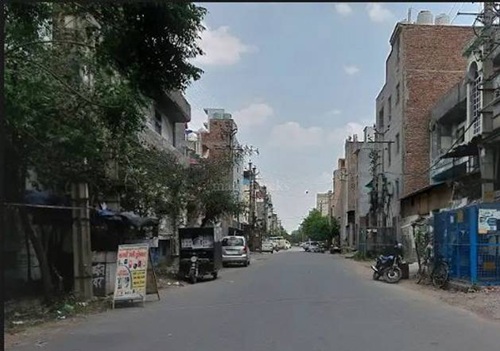
Bawana Village Delhi – Quick Overview
| Detail | Information |
| Location | North West Delhi, Delhi |
| Pin Code | 110039 |
| Assembly Constituency | Bawana |
| Assembly MLA | Jai Bhagwan |
| Lok Sabha Constituency | North West Delhi |
| Established | 1168 CE (original village) |
| Nearest Metro Station | Rithala Metro Station – Red Line (Delhi Metro); approx. 10–12 km |
| Nearest Railway Station | Narela Railway Station – approx. 8.8 km |
| Distance from Central Delhi | Approx. 30–43 km |
| Key Industrial Zone | DSIIDC Bawana Industrial Area (Dr. Shyama Prasad Mukherjee Industrial Park) |
| Notable Facilities | CRPF Base Camp; Air Force Station; Water Treatment Plant |
| Average Property Rate | ₹3,000 – ₹13,333 per sq. ft (as of February 2026) |
| Best For | Industrial workers, affordable housing, small business owners, budget investors |
History of Bawana Village Delhi
Bawana was founded in 1168 CE — revenue department records credit two men named Kala and Thakur, said to have come from Bengal, as the original settlers. Over time the Jat community came to dominate the village, and by the time the British arrived, Bawana had become a Zail (revenue unit) under the colonial zaildari system introduced in the 1860s. The local Jat chief, as Zaildar of Bawana Zail, built the Bawana Fortress in the 1860s as administrative headquarters for the zone covering Bawana, Alipur, and Kanjhawala. The fortress later served briefly as a veterinary hospital before functioning as an orphanage.
The name Bawana itself is the most honest piece of history the village carries. “Bawani” — the older form — referred to the grouping of 52 villages, 5,200 bighas of agricultural land, and the administrative unit that this settlement anchored. An 850-year-old settlement that still goes by a name rooted in a medieval revenue arrangement is doing something right.
How to Reach Bawana Village Delhi
By Metro: The connectivity gap is Bawana’s most significant practical challenge and must be stated plainly. There is no metro station within or immediately adjacent to Bawana. Rithala Metro Station on the Red Line (Delhi Metro) is the nearest, at approximately 10–12 km. Rithala connects to the broader Red Line running from Dilshad Garden in the east to Rithala in the west. From Rithala, residents use DTC buses, autos, or shared transport for the remaining distance to Bawana. The journey requires planning — this is not a neighbourhood for those dependent on quick metro access.
By Road: Bawana Road and Kanjhawala Road are the primary arterials connecting the area to the rest of Delhi. The Outer Ring Road is accessible, linking Bawana toward Rohini, Narela, and further into central Delhi. NH-44 passes in the broader vicinity. DTC bus services run from Bawana Bus Station and Bawana Depot Bus Station, with routes connecting to Rohini, Narela, and other parts of North and North West Delhi.
By Rail: Narela Railway Station is the nearest at approximately 8.8 km. Mundka Railway Station is approximately 16.4 km. Holambi Kalan Railway Station is also in the general vicinity. These stations connect into the broader Delhi suburban and intercity railway network.
Bawana Industrial Area – Delhi’s Planned Industrial Hub
The DSIIDC (Delhi State Industrial and Infrastructure Development Corporation) Bawana Industrial Area — formally named Dr. Shyama Prasad Mukherjee Industrial Park — is the defining economic feature of this locality and one of the largest planned industrial estates in the national capital.
Its origin is a Supreme Court order. In 1996, Delhi’s Commissioner of Industries formulated a scheme to relocate industries from non-conforming residential areas of the city to planned industrial zones. Bawana was designated as one of the primary relocation destinations. Thousands of small and medium-scale manufacturing units — textiles, electronics, food processing, light engineering, plastics, garments — were allotted flatted factory space and industrial plots in Bawana through a draw-of-lots system.
The result is a well-planned industrial layout with wide internal roads, proper drainage, and utility infrastructure — notably better organised than the unplanned industrial clusters it replaced. The estate accommodates everything from single-unit workshops to multi-floor flatted factory complexes. It generates significant employment for workers from across Delhi, Haryana, and UP, and a substantial portion of Bawana’s resident population is directly employed within or adjacent to the industrial area.
Industrial pollution, however, is the persistent trade-off. Proximity to manufacturing units affects air quality, and residents consistently cite this as one of the area’s primary livability concerns. Fire safety in dense industrial clusters has also been a documented issue in the broader North West Delhi industrial belt.
Key Landmarks and Nearby Areas Around Bawana Delhi
CRPF Base Camp and Air Force Station
Bawana hosts both a CRPF (Central Reserve Police Force) base camp and an Air Force Station — two security installations that give the area a degree of organised government presence beyond the industrial complex. These contribute to the area’s basic safety profile even as the industrial density creates separate infrastructure pressures.
Water Treatment Plant
A significant civic infrastructure asset, the water treatment plant in Bawana serves a broader part of North West Delhi’s water supply network. Its presence reflects the area’s role in Delhi’s urban services geography beyond just industrial production.
Bawana Fortress
The 1860s-era fortress built by the Jat Zaildar of Bawana survives as a historical remnant within the village. It is not a tourist site in any organised sense, but for those interested in North Delhi’s Jat heritage and British-era administrative architecture, it represents one of the more unusual surviving structures in this part of the city.
Rohini (approx. 12–15 km)
Rohini — one of Delhi’s largest planned residential sub-cities — is the nearest major urban centre to Bawana. Its malls, hospitals, schools, and Rohini sectors’ commercial infrastructure form the primary reference for higher-order amenities that Bawana itself does not provide. City Square Mall, Pacific Mall Rohini, and major hospital chains are accessible from Bawana via road.
Narela (approx. 8–10 km)
Delhi’s northern industrial and residential planned area, Narela has its own DSIDC Industrial Complex and serves as a commercial and administrative hub for this part of North West Delhi. The Sub-Divisional Magistrate office and government services for the Bawana area are routed through the Narela administrative zone.
Real Estate and Living in Bawana Village Delhi
Property rates in Bawana range widely — from approximately ₹3,000 to ₹13,333 per sq. ft as of February 2026 — reflecting the significant variation between basic village housing, resettlement colony units, and newer builder floors. The lower end of this range represents the most affordable residential property available within Delhi’s administrative boundaries.
The resettlement colonies in Bawana — housing relocated families from across Delhi — form a significant portion of the residential stock alongside the original village housing and JJ Cluster settlements. The housing is dense, utilities are basic, and the amenity infrastructure is functional rather than developed. For workers employed in the industrial area, the proximity calculus is straightforward: live close to work, spend little on rent.
Power cuts during summer are a consistent resident complaint. The absence of direct metro access limits rental demand from professional commuters who prioritise connectivity. These are real constraints that differentiate Bawana sharply from comparable-priced localities in Rohini or outer Dwarka that offer better transit access.
FAQs About Bawana Village Delhi
Q1. What is Bawana village Delhi famous for?
Bawana is primarily known for its DSIIDC Industrial Area — one of Delhi’s largest planned industrial estates, formally named Dr. Shyama Prasad Mukherjee Industrial Park — which houses thousands of small and medium manufacturing units across textiles, electronics, food processing, and engineering. Historically, Bawana is one of Delhi’s oldest villages, established in 1168 CE, and its name derives from “bawan” (fifty-two), reflecting its origin as the administrative centre of a 52-village cluster.
Q2. Which is the nearest metro station to Bawana village Delhi?
Rithala Metro Station on the Red Line (Delhi Metro) is the nearest, approximately 10–12 km from Bawana. There is no metro station within the village or immediately adjacent to it. This is one of Bawana’s primary connectivity limitations — residents rely on DTC buses and autos to reach Rithala for onward metro travel into central Delhi and other parts of the city.
Q3. What industries are located in Bawana Industrial Area?
The DSIIDC Bawana Industrial Area hosts a wide range of small and medium-scale manufacturing units including garment and textile production, electronics assembly, food processing, plastics, light engineering, and general manufacturing. The estate was developed under a Supreme Court-directed relocation scheme from 1996 onward, consolidating industries displaced from Delhi’s residential areas into this planned zone.
Q4. Is Bawana a good place to live in Delhi? For workers employed in the Bawana or Narela industrial zones, it offers genuinely affordable housing within short commuting distance of work. For anyone needing regular metro access to central Delhi or employment corridors in Gurugram, Noida, or south Delhi, the 10–12 km gap to the nearest metro station is a significant daily burden. Basic amenities are present — local markets, schools, clinics — but higher-order healthcare, retail, and entertainment require travel to Rohini or Narela.
Q5. How far is Bawana from central Delhi and IGI Airport?
Bawana is approximately 30–43 km from central New Delhi, depending on the specific route. IGI Airport is roughly 58 minutes by road — verified from hotel listings showing approximately 58-minute drive estimates. Narela Railway Station, the nearest rail access point at 8.8 km, provides train connectivity to New Delhi station for those making intercity journeys.